With automation becoming increasingly sophisticated, the way machines perceive and interact with their surroundings is advancing at an unprecedented pace. We are no longer limited to single-sensor inputs; instead, we are building systems that understand the world more like humans do—by integrating what they see, hear, and feel. This is the core of multi-modal AI. At
FrameAnalytics, we develop automation solutions that seamlessly combine vision, voice, and sensor data into unified systems capable of making real-time decisions. Our AI-driven technologies empower businesses to operate more safely, efficiently, and intelligently across sectors such as industrial safety, healthcare, smart retail, and urban infrastructure.
What Are Multi-Modal AI Systems?
A multi-modal AI system will use the information from more than one source, usually visual (cameras), auditory (microphones), and physical sensors (IoT devices). This allows AI to learn the complex environment better than one-modality systems.
Consider how humans perceive information: we see, we hear, we feel a touch or a temperature simultaneously. One may hear a loud sound, observe smoke, and feel heat before he or she knows that there is a fire. A multi-modal AI system is no different–the more diverse the data is, the better the response can be, the smarter and faster.
At FrameAnalytics, we have designed every system we create to have this human-like awareness.
Why Are Multi-Modal AI Systems More Effective?
Conventional AI tools can only be used in one form of input—say, video surveillance or audio analysis. However, when it comes to using a single source, the danger of making mistakes is higher.
For example:
- A gas leak may not be identified by a camera.
- A microphone could capture a loud sound, but could not tell where it was.
- A motion sensor can sense movement, but it cannot tell whether it is a person or a falling object.
By combining the forms of input into a more comprehensive and realistic picture of the environment, multi-modal AI systems avoid these blind spots. This implies increased safety, decreased decision-making time, and reduced risk of operation.
How FrameAnalytics Builds Multi-Modal AI Systems
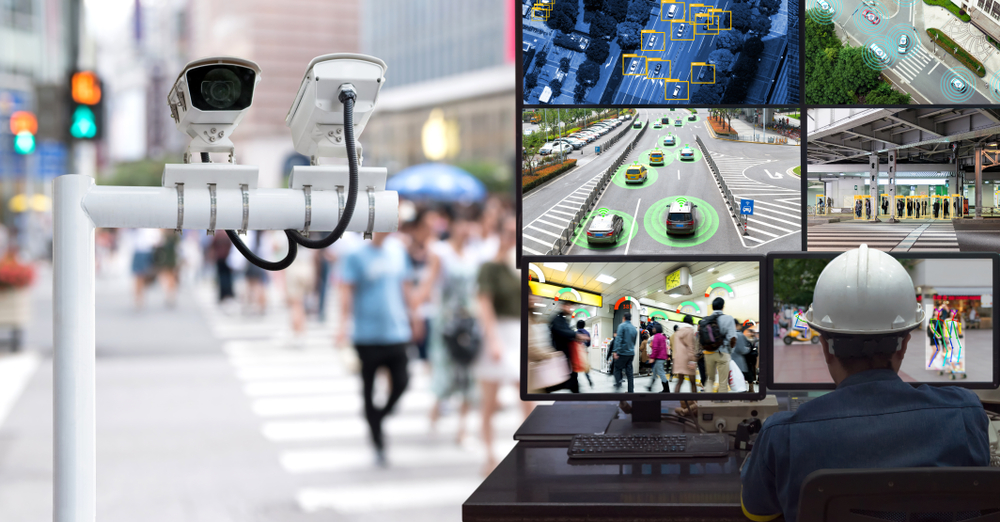
Our systems are set up to meld the inputs in three major spheres: computer vision, voice and audio processing, and sensor-based artificial intelligence. These layers work in real-time to produce actionable insights on different use cases.
1. Vision: AI-Driven Video Analysis
The computer vision solutions provided by us can:
- Monitor restricted zones
- Track people and objects
- Detect anomalies in real time
- Recognise facial or behavioural patterns
- Enable contactless inspections
Such systems could be vision-based, in an industrial environment, for example, to monitor whether a worker enters a dangerous area and initiate alarms or shutdowns.
2. Voice: Audio Recognition and Analysis
Voice and sound-based AI helps decode the environmental sound or speech of a user in:
- Distress detection
- Alarm verification
- Ambient noise surveillance
- Voice commands
- Voice command recognition
Within a healthcare setting, an automated system could pick up coughing, a fall, a cry of distress and alert personnel before it is too late.
3. Sensors: IoT and Real-Time Monitoring
The integrated sensors are used to measure the following:
- Temperature
- Humidity
- Pressure
- Vibration
- Light intensity
- Gas levels
Sensor-based AI is necessary in the industries where environmental changes need to be monitored at all times such as the manufacturing industry, energy industry, or pharmaceutical industry.
The three data sources are combined into a centralised AI model that would be able to recognise and respond to patterns that would be overlooked by one-dimensional models.
Applications of Multi-Modal AI Systems
Industrial Automation and Safety
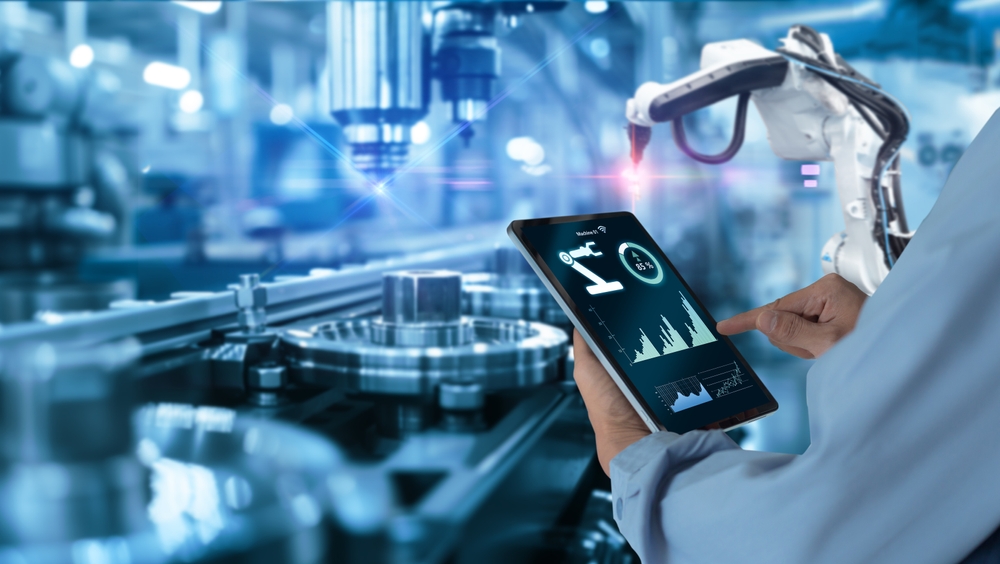
Indeed, in factories and plants, multi-modal AI is used to observe the activity of workers, the state of machines, and environmental conditions. As an example, when a worker goes near a defective machine, the movement is identified by vision, the sensors identify the abnormal heat, and the audio input receives a warning alarm. The AI system acts instantly—it stops the machine, notifies the supervisors, and minimises the possible damage.
Smart City Infrastructure
Multi-modal AI can be used to track traffic, detect accidents, manage lighting, or locate emergencies in cities. Vehicle tracking is done using visual analytics, voice detection is used to locate disturbances, and environmental sensors are used to monitor air quality or noise. These kinds of insights can be used in directing governments to safety and efficiency.
Retail and Customer Analytics
Vision in retailing monitors the customer footfall and product engagements, AI voice answers verbal requests, and shelf sensors monitor the stock. This combination will lead to a smooth shopping process and an optimised operations process.
Healthcare Monitoring
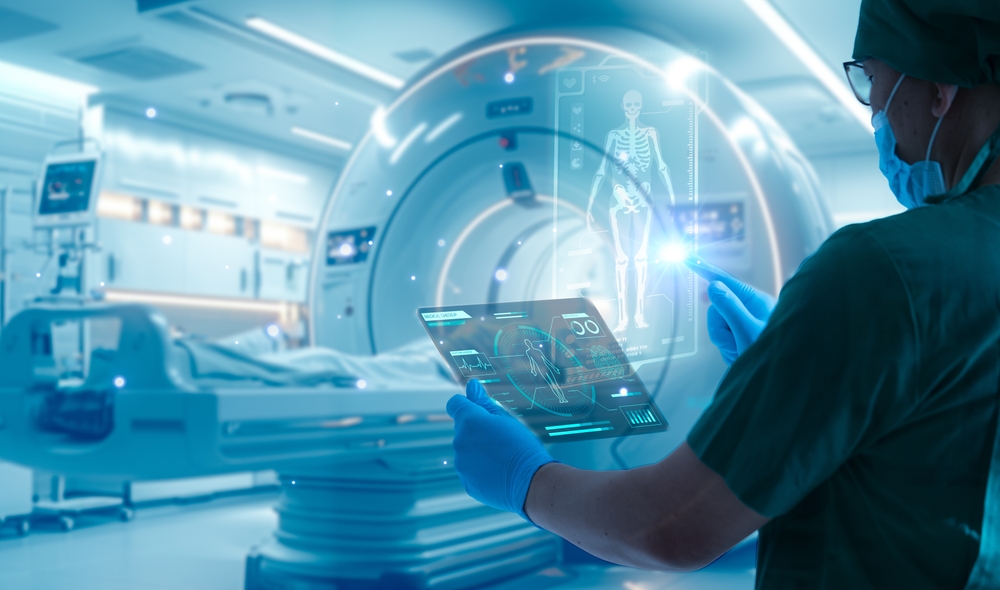
Multi-modal AI is used in hospitals and elder care facilities to track the behaviour of patients and the condition of rooms. The vision systems can recognise a movement or a fall, voice systems can analyse a distress sound and the sensors can measure temperature or oxygen levels—to enable fast response and better patient outcomes.
Why Businesses Are Adopting Multi-Modal AI Systems
The deployment of multi-modal AI will allow the businesses to:
- More accurate in the sense of low false alarms and detection failures
- Faster response and real-time reminders and automatization
- Increased safety and compliance through observation of various risk indicators
- Better decision-making on upgraded stratified information
In FrameAnalytics, all systems are tailor-made to industry requirements, but they are modular, scalable and secure.
The FrameAnalytics Approach
Our technology is not the only thing that is different about FrameAnalytics; it is the way we use it. Our AI system construction is modular, and this allows the clients to:
- Enter related data input
- Integrated with infrastructure that is already in place
- Multi-site or -facility level
- Keep all the privacy and storage of the data under control
It can be a smart warehouse in Delhi or a multi-hospital network in Mumbai, but our solutions are created to be flexible and functional.
We also offer:
- Live monitoring dashboards
- Predictive analytics reports
- Cloud deployment or edge deployment
- Onboarding and support that is hands-on
The Future of Smarter Automation
The future of automation will not be about automating people, but it is about augmenting people, with real-time, context-enriched intelligence. The key element of that change is multi-modal AI systems.
Vision, voice and sensor data together enable businesses to create environments that are automatically responsive to risk, that adapt to changing needs, and that operate more efficiently.
Regardless of your intentions to enhance worker safety, customer experience, or infrastructure, the multi-modal AI provides a clear direction.
The Bottom Line
We think that there is a disconnect between raw data and meaningful action and we believe that our mission at FrameAnalytics is to bridge that gap. It is an era of the creation of information at each point and the capacity to analyse and act upon the information in real time has become a differentiator of business success.
Our expertise is in the development of multi-modal AI systems with vision, voice and sensor inputs. This enables machines to process their surroundings more in a human-like manner—seeing, hearing and feeling things at the same time. The outcome is more intelligent and speedy decision-making processes through stacked and contextual knowledge.
Our systems are not simple automation. They are programmed to examine patterns, identify abnormalities, and react smartly without human interference. This is not only efficient in its operation but also guarantees increased safety, compliance, and flexibility across sectors.
Each solution that we provide is designed to make automation more intuitive, scalable, and human-sensitive, enabling businesses to transition to proactive intelligence as opposed to reactive workflows.